Melbourne Airport Terminals
Information compiled by David Enrich, aviation and airport guide expert since 1999.
Melbourne Airport (MEL), also known as Tullamarine Airport, is the main international gateway to Victoria and one of Australia’s busiest airports. Located approximately 23 km from Melbourne city centre, it operates as a single integrated airport with four terminals (T1–T4) positioned within walking distance of each other. Despite handling a high volume of passengers, the airport is relatively easy to navigate if you understand how each terminal works.
History and origins
Melbourne Airport opened in 1970, replacing the older Essendon Airport as the city’s main aviation hub. Over the decades, it has expanded significantly to accommodate international growth, particularly in Asia-Pacific routes. Today, it serves as a major hub for Qantas and Virgin Australia and is one of the key long-haul gateways in the Southern Hemisphere.
Terminal overview and layout
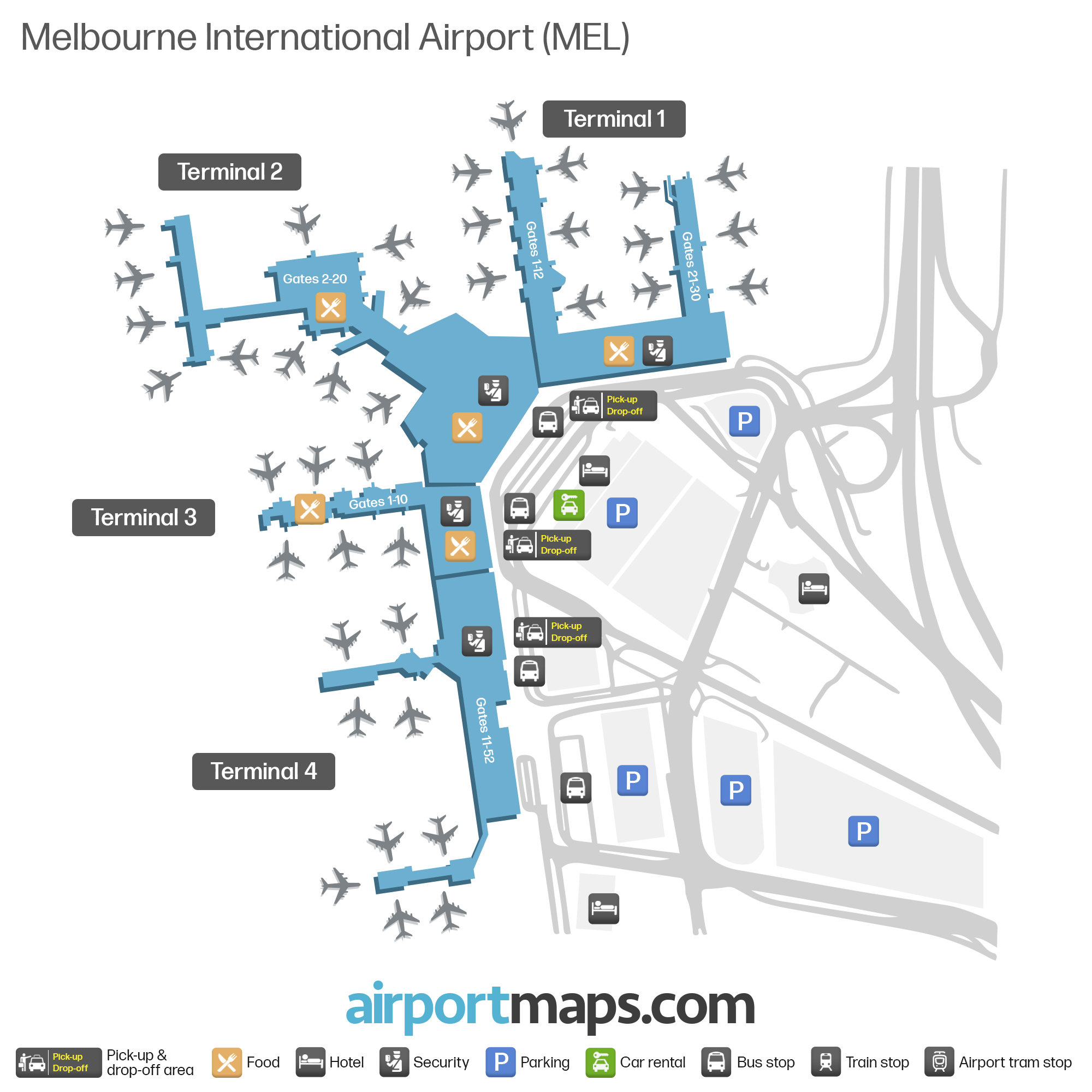
The airport consists of four terminals located in the same precinct:
Terminal 1: Qantas domestic flights
Terminal 2: All international flights
Terminal 3: Virgin Australia domestic flights
Terminal 4: Low-cost carriers (Jetstar, Rex, others)
All terminals are connected landside by walking (5–10 minutes between adjacent terminals).
Tip: Always check your terminal before arriving, as walking between T1 and T4 can take up to 15 minutes.
Terminal 1 (Qantas Domestic)
Terminal 1 is modern and well-equipped, primarily serving Qantas domestic operations.
Layout:
Ground level: Check-in and baggage drop
Upper level: Security and departure gates
Facilities:
Free Wi-Fi, ATMs, lounges (Qantas Club), charging points
Food and dining:
Hudsons Coffee (early morning to evening)
Bar Pulpo (Spanish-inspired dining)
Qantas lounges with premium dining
Shops:
Travel essentials, books, souvenirs
Terminal 1 offers one of the best lounge experiences in the airport.
Terminal 2 (International)
This is the largest and busiest terminal, handling all international arrivals and departures.
Layout:
Ground level: Arrivals and baggage claim
Upper level: Departures, check-in, security, immigration
Facilities:
Duty Free shopping, currency exchange, lounges, showers
Duty Free:
Large selection of perfumes, alcohol, electronics, luxury goods
Restaurants:
Brunetti (Italian café and desserts)
Two Johns Taphouse (craft beer and meals)
McDonald’s and fast food options
Allow extra time for security and immigration, especially during peak international departures.
Terminal 3 (Virgin Australia)
Terminal 3 is smaller and focused on Virgin Australia domestic flights.
Layout:
Single main level with check-in, security, and gates
Facilities:
Wi-Fi, lounges, cafés
Dining:
Cafés and quick-service outlets
Usually less crowded than Terminal 1, making it faster for check-in and boarding.
Terminal 4 (Low-cost)
Terminal 4 is the newest terminal, designed for low-cost carriers such as Jetstar.
Layout:
Self-service check-in kiosks
Security and departure gates in a large open hall
Facilities:
Basic services, limited lounges
Dining:
Fast food, cafés, grab-and-go options
Expect fewer amenities but generally efficient boarding processes.
Check-in, security and boarding
Check-in is available both online and at airport counters. Self-service kiosks are widely used, especially in Terminal 4.
Security wait times vary:
Domestic: 5–15 minutes
International: 20–40 minutes
For international flights, arrive at least 3 hours before departure.
Facilities and services
Free Wi-Fi throughout all terminals
ATMs and currency exchange in all terminals
No official luggage storage inside terminals (external providers available nearby)
Families and accessibility:
Family restrooms and baby changing areas
PRM assistance available (request via airline)
Lost and found:
Handled by airport authorities and airlines depending on location of loss
Report lost items as soon as possible for higher recovery chances.